
EN ISO 11393-2 – Cut protection for chainsaw work
In short: EN ISO 11393-2 covers leg protection against chainsaw injuries. The protective effect is achieved in several ways – the chain is deflected, slowed down or blocked: long fibres are pulled out, wrap around the drive sprocket and bring the saw to a standstill. The class depends on the chain speed, the design on where the protection is located.
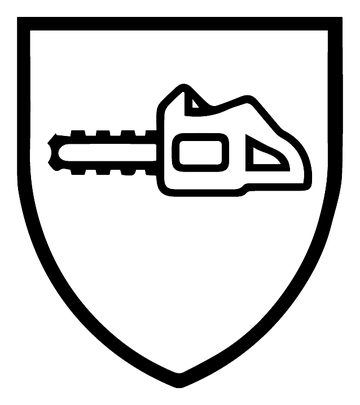
- The marking
- Protective clothing in accordance with this standard offers protection against cut injuries to the legs that can occur when working with hand-held chainsaws. How effective the protection is in an emergency depends on many factors: the speed of the saw, the torque of the engine, the intensity and duration of contact, the angle at which the guide bar hits the fabric and the working position.
- The pictogram must be attached to the outside of the garment in a clearly visible position.
Protection classes by chain speed
| Class | Chain speed | Typical use |
|---|---|---|
| 1 | 20 m/s | The norm in private and municipal use |
| 2 | 24 m/s | Professional forestry work |
| 3 | 28 m/s | High-performance saws, special applications |
The class must match the chain speed of the saw being used; when choosing the class and design, the user's experience also plays a part – from the trained professional to the occasional user.
The former standard EN 381-5 lost its presumption of conformity on 19 November 2021. New goods are certified to EN ISO 11393-2. Existing equipment to EN 381-5 does not automatically become unusable as a result – but replacement purchases should switch to the current standard.
The three designs – where the protection is located
| Design | Protected area | Suitable for |
|---|---|---|
| A | Front of the leg | Standard timber harvesting work by trained professionals |
| B | As A, as leggings / chaps | Occasional work, worn over normal trousers |
| C | Front and back – all-round protection | Infrequent use and exceptional situations, e.g. civil protection and fire services |
What matters in practice
More layers are not automatically better
Cut protection is created by layers of fibres that wrap around the sprocket. The obvious assumption would be: more layers, more protection. In fact, it is the fibre quality that counts. Our KÜBLER FOREST cut protection trousers PRO achieve class 2 with seven layers – where simpler constructions already need nine layers for class 1. Fewer layers mean less weight, better freedom of movement and less heat stress. And protection that does not tire you out is still being worn in the afternoon.
Replace after every cut incident
Cut protection works once. As soon as the chain has pulled out fibres, the protective effect at that point is used up – even if the trousers look almost undamaged from the outside. Trousers that have been in contact with the chain must be withdrawn from service, not repaired.
Washing changes the material
Washing or drying at too high a temperature can cause the cut protection insert to felt and reduce its effectiveness. For our High Vis cut protection trousers, a reduced washing temperature of 60 °C and drying at reduced temperature are therefore expressly specified. You can find out more on the page about industrial laundering to EN ISO 15797.
Leg protection is only one part of the equipment
Complete protective equipment for chainsaw work also includes a helmet with face and hearing protection, cut protection boots and gloves. EN ISO 11393-2 covers the leg area only.
Cut protection trousers
Three styles from our collections are certified to EN ISO 11393-2.
Good places to start: cut protection trousers and forestry.
Frequently asked questions
How does cut protection actually work?
Through three principles, often combined: the material deflects the chain, slows it down – or blocks it, as long fibres that have been pulled out wrap around the drive sprocket and bring the saw to a standstill.
Which class do I need?
It depends on the chain speed of the saw: class 1 up to 20 m/s, class 2 up to 24 m/s, class 3 up to 28 m/s. For professional forestry work, class 2 is the norm.
Can I keep wearing the trousers after a cut?
No. Cut protection works once – after contact with the chain, the protective effect at that point is used up, even if the trousers appear intact from the outside. Withdraw them from service, do not repair them.
Are my old trousers to EN 381-5 still valid?
EN 381-5 lost its presumption of conformity on 19 November 2021. This does not make existing equipment unusable overnight, but replacement purchases should switch to EN ISO 11393-2.
Are cut protection trousers enough on their own?
No. EN ISO 11393-2 covers the leg area only. Complete equipment includes a helmet with face and hearing protection, cut protection boots and gloves.
Advice on cut protection
Cut protection works once.
Then it must be withdrawn from service.
We will work out with you which class matches your saw, which design suits your working posture – and how the equipment has to be treated in the laundering process.
Last updated: July 2026