
EN 342 – Protection against cold
In short: EN 342 applies to cold protection at −5 °C and below – cold stores, frozen-food logistics, winter construction. The decisive difference from EN 14058: what is assessed is not the individual garment, but the complete clothing ensemble. An individual garment is only measured and marked together with a defined reference clothing ensemble – in use, it is the complete ensemble worn that counts.
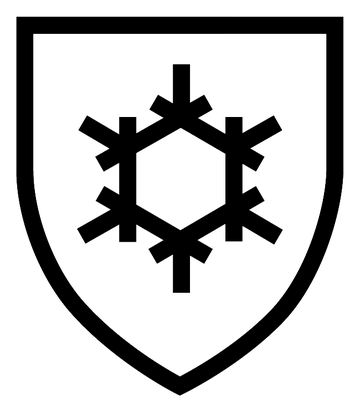
The resultant basic thermal insulation value (Icler) must be stated with the pictogram.
The parameters
| Parameter | Assesses | Status |
|---|---|---|
| Icler | Resultant basic thermal insulation of the ensemble or garment | Mandatory |
| AP | Air permeability – wind protection | Mandatory (unlike EN 14058) |
| WP | Resistance to water penetration | optional |
Unlike most protection standards, the insulation value has no classes, but a numerical value. It is stated together with a table showing which wearing time is acceptable at which temperature and which level of activity.
EN 342 or EN 14058?
| EN 342 | EN 14058 | |
|---|---|---|
| Applies to | Complete ensembles | Individual garments |
| Temperature | −5 °C and colder | above −5 °C |
| Air permeability | Mandatory | optional |
| Parameter | Insulation value with wearing-time table | Rct in 4 classes |
In practical terms: anyone procuring cold-store equipment is not buying “a jacket to EN 342”, but a tested combination. If one part of it is replaced by another, the test no longer applies to this new combination.
What matters in practice
Wearing time is part of the risk assessment
Cold protection to EN 342 is always stated with a maximum duration of use. For the business, this means: warm-up breaks are not a goodwill gesture, but part of the protection concept. Anyone procuring the equipment should know the table – it is in the manufacturer's information.
The floor draws off more heat than the air
During standing work in refrigerated areas, the greatest heat loss is through the feet. Cold-protective clothing to EN 342 does not solve this problem – appropriate footwear is part of the equipment.
Sweating is the main risk
Anyone who works physically in cold-protective clothing and sweats through it cools down much faster at the next standstill than without. That is why a cold-protection system includes a moisture-wicking layer directly on the skin – cotton next to the body is the worst choice in the cold.
Collections for cold protection
Four styles from our collections are tested in accordance with EN 342 – jackets and trousers, intended as a combination.
For temperatures above −5 °C, EN 14058 is usually the appropriate standard – the range there is considerably larger.
Frequently asked questions
Can a single jacket meet EN 342?
No. The standard assesses complete clothing ensembles. It is the combination that is tested, typically jacket and trousers, where applicable with defined undergarments. EN 14058 applies to individual garments.
Why is there no class on the label?
Because EN 342 works with a numerical value for insulation rather than with classes. This comes with a table showing the permissible wearing time at particular temperatures and levels of activity.
May I swap parts of the ensemble?
Then the test no longer applies to the new combination. The certification relates to the tested combination – not to the individual parts.
What do I wear underneath?
A moisture-wicking layer directly on the skin. Cotton retains moisture and then cools down – in the cold it is the worst choice next to the body.
Advice on cold protection
In the cold store, it's the system
that counts, not the single garment.
We put together the tested combination with you and go through the wearing-time table for your temperatures and activities.
Last updated: July 2026